
Every time we drive down to Monaco for an afternoon, Michel does the same thing: he counts the cranes on the skyline and compares them to the last visit. There is always at least one new tower going up, and always, somewhere behind it, a shuttered Belle Époque facade waiting for someone braver than us to restore it. That contrast is really the whole question for anyone weighing a purchase in the principality: does the future or the past make the better investment?
Neither one, on its own, is the safer bet. Monaco’s land is so constrained and demand so concentrated that both historic and modern properties have kept appreciating, though the two segments behave differently on price per square metre, running costs and who actually wants to live in them.
- Monaco’s average price reached roughly €57,569 per square metre in 2025, the second highest figure ever recorded there.
- New buildings completed since 2020 average €65,602 per square metre, noticeably above the principality-wide figure.
- Larvotto is the first district to cross €71,167 per square metre; Moneghetti and Jardin Exotique remain the relative entry points, still above €43,000.
- Historic properties cost less to buy per square metre on average, but more to maintain over time.
- 1 What Monaco’s market actually looks like right now
- 2 Why historic properties still have their fans
- 3 Why buyers keep choosing new builds instead
- 4 Comparing the districts side by side
- 5 Does the number of bedrooms matter more than age?
- 6 Tax treatment applies the same way to both
- 7 So which one is the better investment?
What Monaco’s market actually looks like right now
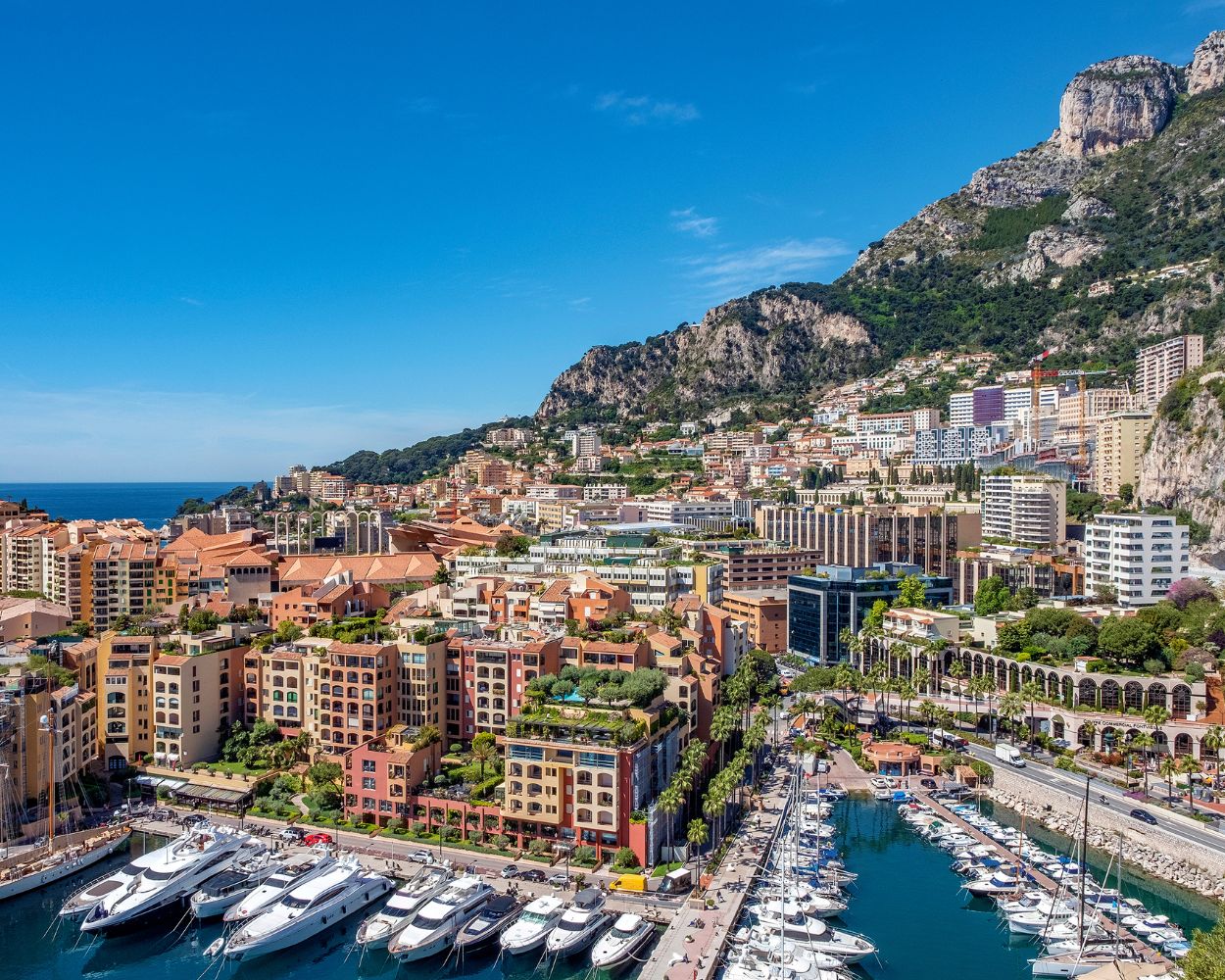
Monaco is internationally ranked among the most expensive places on earth to buy property, and the numbers back that reputation up. The principality-wide average sat around €57,569 per square metre in 2025, according to figures reported by Monaco Life and confirmed by local agencies Petrini and Livein, making it the second highest level ever measured there.
What surprised us most was how much district location moves that average. Larvotto became the first neighbourhood to break the €71,167 per square metre mark, while Monte-Carlo sits closer to €54,000. Even the comparatively affordable pockets, Moneghetti and the Jardin Exotique, still trade above €43,000 per square metre, which puts Monaco’s idea of an “entry point” in a category of its own.
Why historic properties still have their fans
A Belle Époque apartment in Monte-Carlo, with its high ceilings, ornate mouldings and generous room proportions, offers something a new build simply cannot manufacture: a genuine sense of period character. Many of these buildings sit within a short walk of the Casino de Monte-Carlo and the Opéra, in streets that have not changed much in a century.
The trade-off is real, though. Older buildings rarely come with a private gym, pool or underground parking, and renovating one under Monaco’s heritage rules can be slow and expensive. Anyone drawn to a historic property should budget for that upkeep from day one rather than treating it as a distant possibility.
Why buyers keep choosing new builds instead
Modern developments in Monaco, concentrated in areas like Larvotto and parts of Fontvieille, are built to a different promise: wellness facilities, underground parking, energy efficiency and, often, sweeping sea views engineered into the design from the start. That newness is priced in, which is part of why new-build stock averages nearly €8,000 more per square metre than the principality-wide figure.
Lower maintenance costs in the near term are the other draw. A building finished in the last five years is simply less likely to need a roof, facade or lift replaced next year than one dating from the 1920s.
Comparing the districts side by side
Where you buy in Monaco changes the equation almost as much as what you buy. The table below reflects 2025 figures reported by Monaco Life, Petrini and Livein.
| District | Approx. price per m² (2025) | Character |
|---|---|---|
| Larvotto | €71,167+ | Mostly modern, beachfront, highest prices in Monaco |
| Monte-Carlo | ~€54,000 | Historic core, Casino and Opéra district |
| Fontvieille | Below principality average | Newer apartments, quieter residential feel |
| Moneghetti / Jardin Exotique | €43,000+ | Relatively more affordable, still very high by any other standard |
Source: Monaco Life, “Monaco real estate 2025” (2025); Petrini.mc and Livein.mc district price data (2025).
Does the number of bedrooms matter more than age?
In our experience talking with people who have bought in Monaco, size alone rarely drives the price the way bedroom count does. One and two-bedroom homes dominate the market simply because land is so scarce, and anything with three or more bedrooms, whether in a historic building or a new tower, commands a real premium precisely because so few exist.
Tax treatment applies the same way to both
Monaco’s absence of income tax and its low business taxation are part of why demand stays high regardless of a property’s age, and property taxes themselves do not differentiate between historic and modern buildings. The difference shows up afterwards, in renovation and upkeep costs, which tend to run higher on older stock.
So which one is the better investment?
Honestly, we think the question is slightly the wrong one. Monaco’s land scarcity means both segments have kept appreciating, and the right choice depends far more on how you plan to use the property, and how much ongoing maintenance you are willing to take on, than on some inherent superiority of old over new or the reverse.
A few honest distinctions to weigh: historic properties tend to sit in the most established addresses, near the Casino and the Opéra, but demand higher restoration budgets; modern ones cost more per square metre yet keep running costs lower for the first years of ownership.
A couple of questions come up whenever we talk about this with friends. Do renovation costs really change the calculation that much? They can, since heritage rules in Monte-Carlo’s protected buildings limit what can be altered, and skilled local contractors are in short supply, so a full renovation of a historic apartment often runs well beyond initial estimates. Is a new build always the lower-risk choice? Not automatically. New developments still depend on the same scarce land, and a poorly oriented new tower can lose appeal just as fast as a neglected historic one, so location and light matter more than the construction date on their own.
We are not real estate professionals, just two retirees who enjoy following this market from the other side of the border, so anything involving Monegasque residency, tax rules or financing should go through a specialised local notary or agency before you commit to anything. If Monaco’s prices give you pause, it is worth seeing what prestige property looks like a short drive along the coast in our overview of luxury real estate in Nice, and if Monaco itself remains the goal, we go further into the practicalities in our piece on investing in Monaco real estate.
Published 21 August 2023. Last updated 29 July 2026.
Sources: Monaco Life, “Monaco real estate 2025: high-value flips, limited new supply and a revamped price index” (2025); Petrini.mc, price per m² in Monaco (2025); Livein.mc, Monaco real estate market data (2025).