Michel likes to say that Nice is the only place he has ever lived where the view changes his mood before his morning coffee does, and after fifteen years here, we still notice it every single day. That is really the starting point for understanding why prestige property in this city commands the prices it does: it is never just about square metres.
Nice’s luxury property market rewards a very specific combination of view, neighbourhood and architectural character, and the price gap between an ordinary Nice apartment and a prestige one in Mont Boron or on the Promenade des Anglais can run to three or four times the base rate. Knowing which district fits which lifestyle matters more here than almost anywhere else on the coast.
- Nice apartment prices reached around €5,130 per square metre in January 2025, with the high-end segment a real driver of the city’s +5 to 6% annual growth.
- Mont Boron villas trade between roughly €10,000 and €15,000 per square metre, among the highest in the city.
- The Promenade des Anglais commands €4,300 to €6,000 per square metre generally, with standout units exceeding €10,000.
- Internationally, over 60% of French properties above €5 million go to foreign buyers, though the broader luxury market remains dominated by secondary homes.
- 1 Where Nice’s property market stands today
- 2 Financing conditions have eased a little since the tightest years
- 3 What “luxury” actually buys you in Nice
- 4 Discovering the city behind the price tags
- 5 The neighbourhoods worth knowing
- 6 Comparing Nice’s prestige districts
- 7 Finding the right agency for a prestige purchase
- 8 Questions we hear most often
Where Nice’s property market stands today
The Riviera as a whole has kept climbing through 2025, and Nice specifically has posted apartment prices around €5,130 per square metre as of January 2025, up 1.9% over the year, while houses reached €5,490 per square metre, a 2.6% rise, according to market analysis published by Living on the Côte d’Azur. Zoom out to the city level and growth looks even stronger, closer to 5 to 6% year on year, with the high-end segment and up-and-coming pockets like Le Port, Riquier and Libération both contributing.
Nationally, France’s luxury residential segment still leans heavily toward existing rather than newly built stock: secondary properties represented 83.5% of the luxury market in 2025, largely because buyers trust proven construction quality and want to move in immediately, in a heritage building rather than wait for a new one to be finished.
Financing conditions have eased a little since the tightest years
Anyone who shopped for a mortgage here in 2022 or 2023 will remember how sharply rates climbed. That has reversed somewhat: the average annualised mortgage rate for 2025 is expected around 3.14%, roughly half a point below 2024, with well-qualified borrowers seeing offers between 3.5% and 4.5% over 20 years. The Haut Conseil de Stabilité Financière still caps the debt-to-income ratio at 35% and loan terms at 25 years for most cases (27 for a self-build or major renovation project), and banks typically expect a personal contribution of 15 to 20% of the purchase price. None of that is unique to luxury property, but at Nice’s price levels, that contribution requirement alone represents a serious sum to have ready.
What “luxury” actually buys you in Nice
Beyond size, the properties that command the highest prices here share a few traits: an unobstructed sea or hill view, proximity to the historic centre or to a quiet green setting, and architectural character, whether that means Belle Époque mouldings or a genuinely well-designed contemporary build. Outdoor space, a terrace, a balcony or a garden, matters as much to today’s buyers as an extra bedroom would.
Nice’s own international pull explains part of the premium too. Over 60% of French properties selling above €5 million go to buyers from outside the country, drawn as much by the lifestyle, the schools and the climate as by the property itself.
One detail we always mention to friends looking at older buildings: heritage character comes with an energy performance question that new constructions do not have. Many Belle Époque buildings in Cimiez or the historic centre carry a weaker DPE rating than a modern development, and bringing one up to standard, new windows, better insulation, sometimes a full rewiring, can be a slow, tightly regulated process in protected buildings. It is a real cost to factor in before falling for the mouldings, not a reason to avoid them.
On property type, national data shows the luxury segment still leans heavily toward existing apartments and villas rather than new-build stock, which lines up with what we see locally: buyers here are generally choosing a specific address and a specific view over a brand-new shell, even when the new option would need less immediate work.
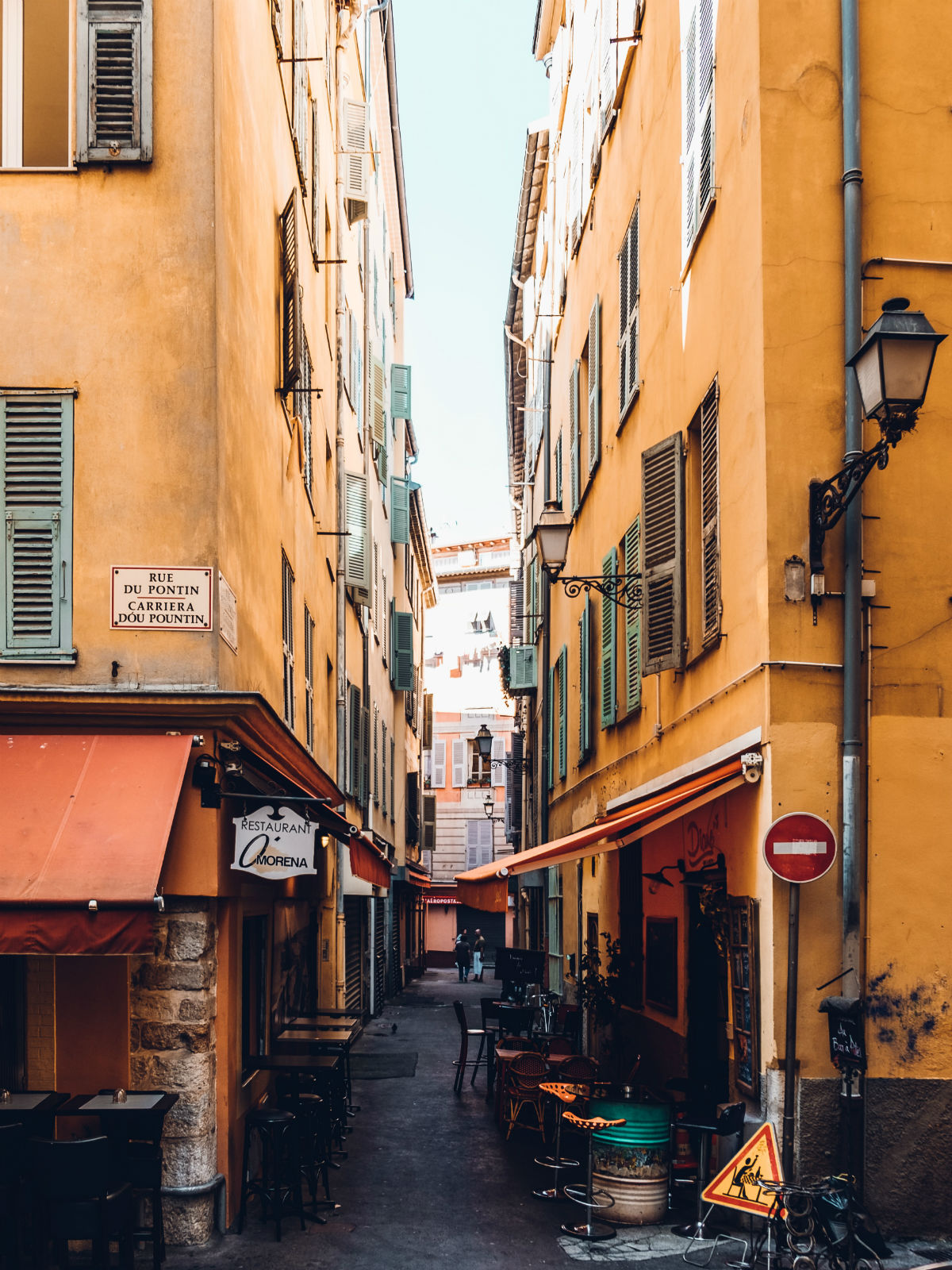
We never get tired of showing visitors around, and a few places always make the list. The Colline du Château offers a view that genuinely justifies the climb, mountain and sea meeting at the edge of the old town. The narrow streets of Vieux-Nice, with their ochre facades, lead straight to Cours Saleya, alive with its market from Tuesday to Sunday.
The Promenade du Paillon, starting at Place Garibaldi, is where we send anyone travelling with children: water features, picnic spots and rare plant species make it feel like a permanent holiday rather than a city park. And then there is the coastline itself, from the public beaches of Lenval and Carras to private clubs like Cocoon Beach, plus a full range of water sports for anyone restless enough to want one.
History runs just as deep here as the coastline does. The Masséna museum, the Bellet castle, the Lascaris palace and the archaeological crypt each tell a different chapter of Nice’s past, and together they explain why the city’s heritage districts hold their value so consistently.
The neighbourhoods worth knowing
Mont Boron, overlooking the bays of Les Anges and Villefranche with a forest at its back, is Nice’s clearest luxury address, trading between roughly €10,000 and €15,000 per square metre, and only ten minutes from the centre despite feeling worlds away from it.
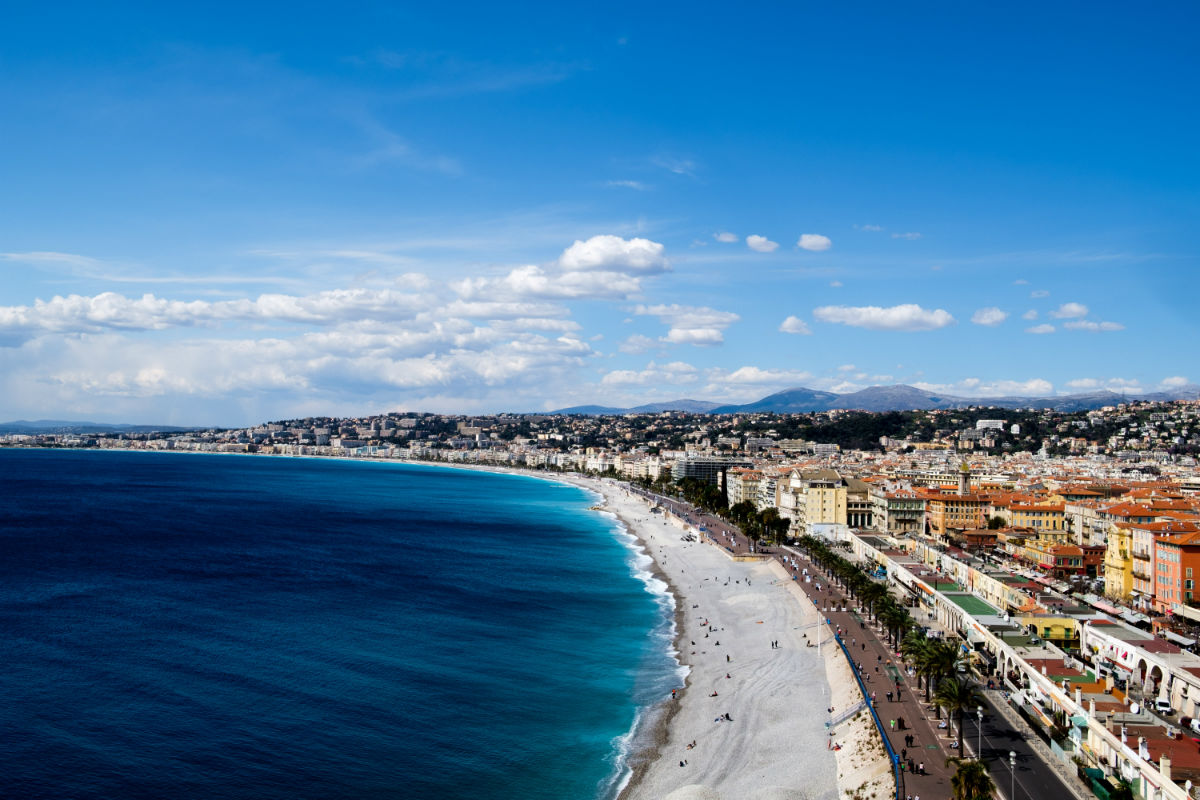
The Promenade des Anglais itself remains the most photographed stretch of the city, generally priced between €4,300 and €6,000 per square metre, though a handful of standout apartments with unobstructed sea views push past €10,000.
Cimiez, on the hill of the same name, blends Belle Époque villas with the Roman ruins and the Matisse Museum, and prices there typically fall between €6,000 and €10,000 per square metre. Families gravitate here for the elevated position, the quiet, and the proximity to well-regarded schools.
Port Lympia, wrapped around the old port, sits close enough to both Vieux-Nice and the Promenade to suit buyers who want a lively, constantly improving neighbourhood rather than a purely residential one.
Comparing Nice’s prestige districts
| District | Approx. price per m² | Best suited to |
|---|---|---|
| Mont Boron | €10,000-€15,000 | Privacy, forest setting, panoramic views |
| Promenade des Anglais | €4,300-€6,000 (up to €10,000+) | Sea views, central location, prestige address |
| Cimiez | €6,000-€10,000 | Families, heritage architecture, calm |
| Port Lympia | Below the above ranges | Buyers wanting a dynamic, central neighbourhood |
Source: Côte d’Azur Sotheby’s Realty, neighbourhood price guide (2023-2025 data); Living on the Côte d’Azur, French Riviera market analysis (2025).
Finding the right agency for a prestige purchase
Prestige property in Nice is a narrow, relationship-driven market, and the agencies that do it well tend to specialise rather than treat luxury listings as one category among many. We go into the practical criteria for choosing one, catalogue quality, e-reputation, and how to read client feedback properly, in our dedicated guide to choosing a luxury real estate agency, so we will not repeat the whole checklist here. If you want a starting point rather than a blank search, Haussmann Real Estate is an agency we have seen handle Nice prestige listings well.
What we will say specific to Nice: ask any agency directly which of the four districts above they know best, and be wary of anyone who claims equal expertise across all of them. Mont Boron and Cimiez, in particular, reward an agent who actually knows the individual buildings, not just the general area.
It is also worth asking early on how a property has performed as a rental, if that matters to you, since a fair number of prestige buyers here use a property only part of the year and let it earn something the rest of the time. An agent who cannot answer that question with real figures, rather than a vague estimate, is probably not the right one for a purchase at this level.
Questions we hear most often
Is Nice still a safe long-term bet for prestige property? The data through 2025 suggests yes, with steady single-digit annual growth and rental yields in prime areas reaching 4 to 6%, though nothing in real estate is ever guaranteed and local conditions can shift.
Do I need to buy in one of the four named districts to get real prestige? No, but those four currently carry the strongest track record and the clearest premium, which matters if resale value is part of your thinking.
Are foreign buyers still active in this segment? Very much so. International buyers account for the majority of transactions above €5 million nationally, and Nice’s lifestyle appeal keeps drawing them specifically.
How much deposit will a bank expect for a prestige purchase? Plan on at least 15 to 20% of the price as personal contribution under current lending rules, on top of notaire fees, which is a substantial sum at Nice’s prestige price levels and worth confirming with a broker early rather than late.
Is a historic property in Cimiez a bigger commitment than it looks? Often, yes. Beyond the purchase price, budget honestly for energy renovation work if the building’s DPE rating is weak, since heritage rules can slow down what would otherwise be a straightforward upgrade.
We are two residents who have watched this market from the outside for a decade and a half, not real estate professionals, so treat everything here as a starting point for your own research rather than a substitute for tailored advice from a notaire, a mortgage broker or a specialised local agent who can look at your actual situation. If Monaco’s even higher price bracket is part of your comparison, our guide to discovering Nice beyond the property listings is worth a look for the lifestyle side of the decision.
Published 22 November 2021. Last updated 29 July 2026.
Sources: Living on the Côte d’Azur, French Riviera market analysis (2025); Côte d’Azur Sotheby’s Realty, Nice neighbourhood price guide; Mordor Intelligence, France Luxury Residential Real Estate Market report (2025).